 Türkçe
 English
 Deutsch
 Français
 Español
 Italiano
 Português
 Polski
 Русский
 Українська
 العربية
 ქართული
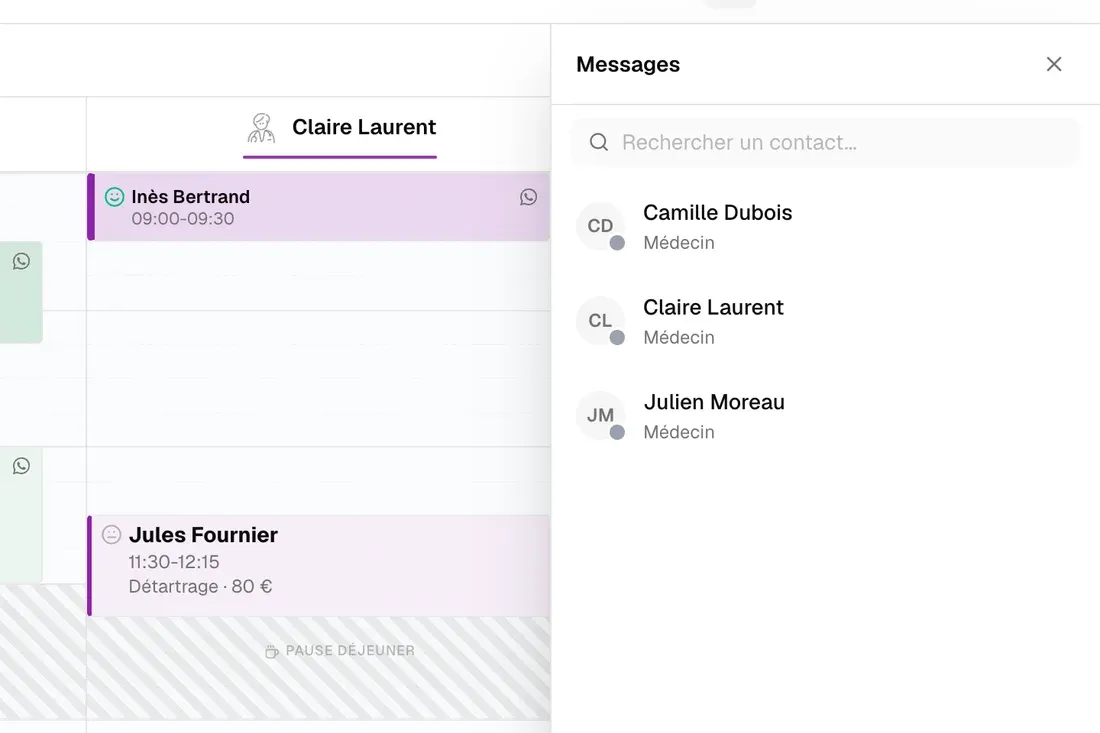
Effective dental patient communication uses three channels, SMS for confirmations, WhatsApp for two-way conversations, and email for treatment plans and recalls, automated through your practice management software. Clinics with automated multi-channel communication see 60% fewer no-shows and 40% higher patient satisfaction scores.
Why channel choice matters
In 2015, a reminder email was enough. Today, email open rates in healthcare hover around 22%. Meanwhile, SMS open rates are 98% and WhatsApp messages are read within 3 minutes on average.
If you’re still running your patient communication on email alone, you’re reaching less than a quarter of your patients.
The three-channel framework
Email: Best for detailed, non-urgent communication. Use it for: appointment confirmations with full details, post-treatment care instructions, monthly newsletters, invoice delivery.
SMS: Best for short, time-sensitive messages. Use it for: appointment reminders (48h and same-day), waitlist notifications, quick confirmations. Keep messages under 160 characters.
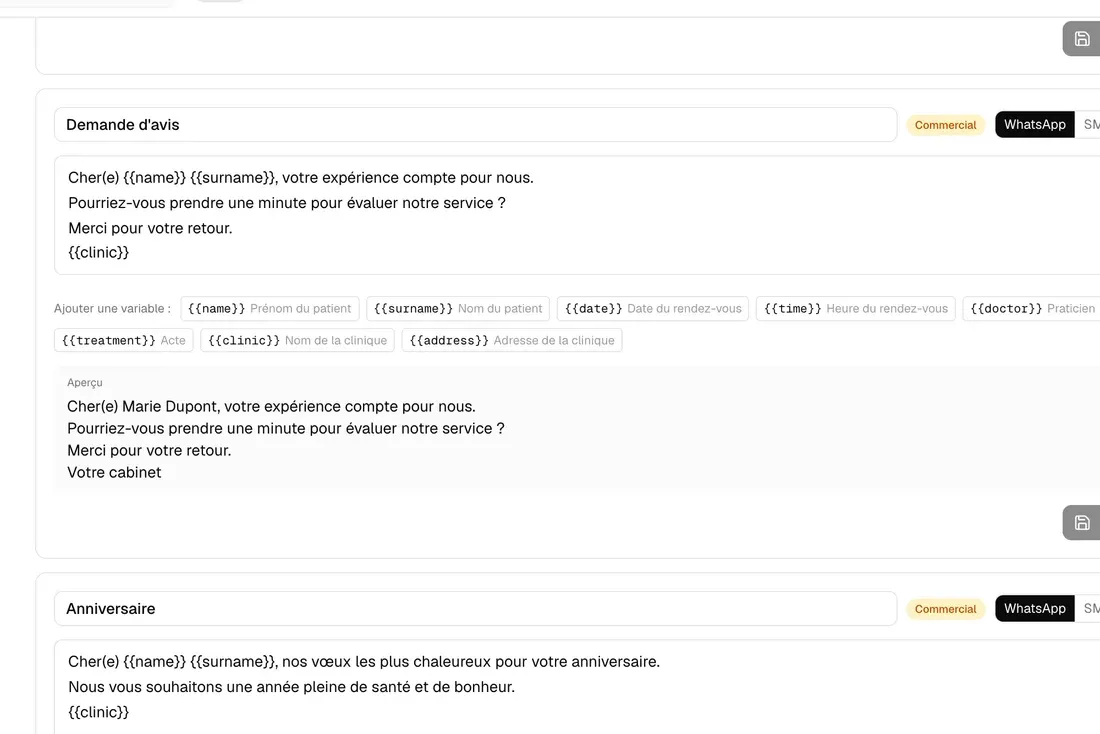
WhatsApp: Best for two-way communication and high engagement. Use it for: appointment reminders (highest open rates), rescheduling requests, quick questions. Requires patient opt-in.
Automation sequence example
A well-designed automation sequence for a routine appointment:
- Booking confirmed → Email with full details + calendar invite
- 7 days before → Email reminder
- 48 hours before → SMS reminder with confirm link
- 24 hours before → WhatsApp reminder (if opted in)
- 4 hours before → SMS “see you today” with address/parking
- Post-appointment → Email with care instructions + feedback request
- 6 months later → Email/SMS recall reminder
This sequence, fully automated, typically increases treatment acceptance, reduces no-shows by 35%, and improves recall rates by 20%.
Tone and personalisation
Always use the patient’s first name. Mention their doctor’s name. Reference the specific appointment type, not generic “your appointment.”
Patients ignore generic messages. They respond to personal ones.
Consent and opt-outs
Under GDPR and equivalent regulations, you need:
- Written consent for marketing communications
- Easy opt-out mechanism in every message
- Separate consent for different channels
Appointment reminders are generally permitted under “legitimate interest” but confirm with your DPO.